
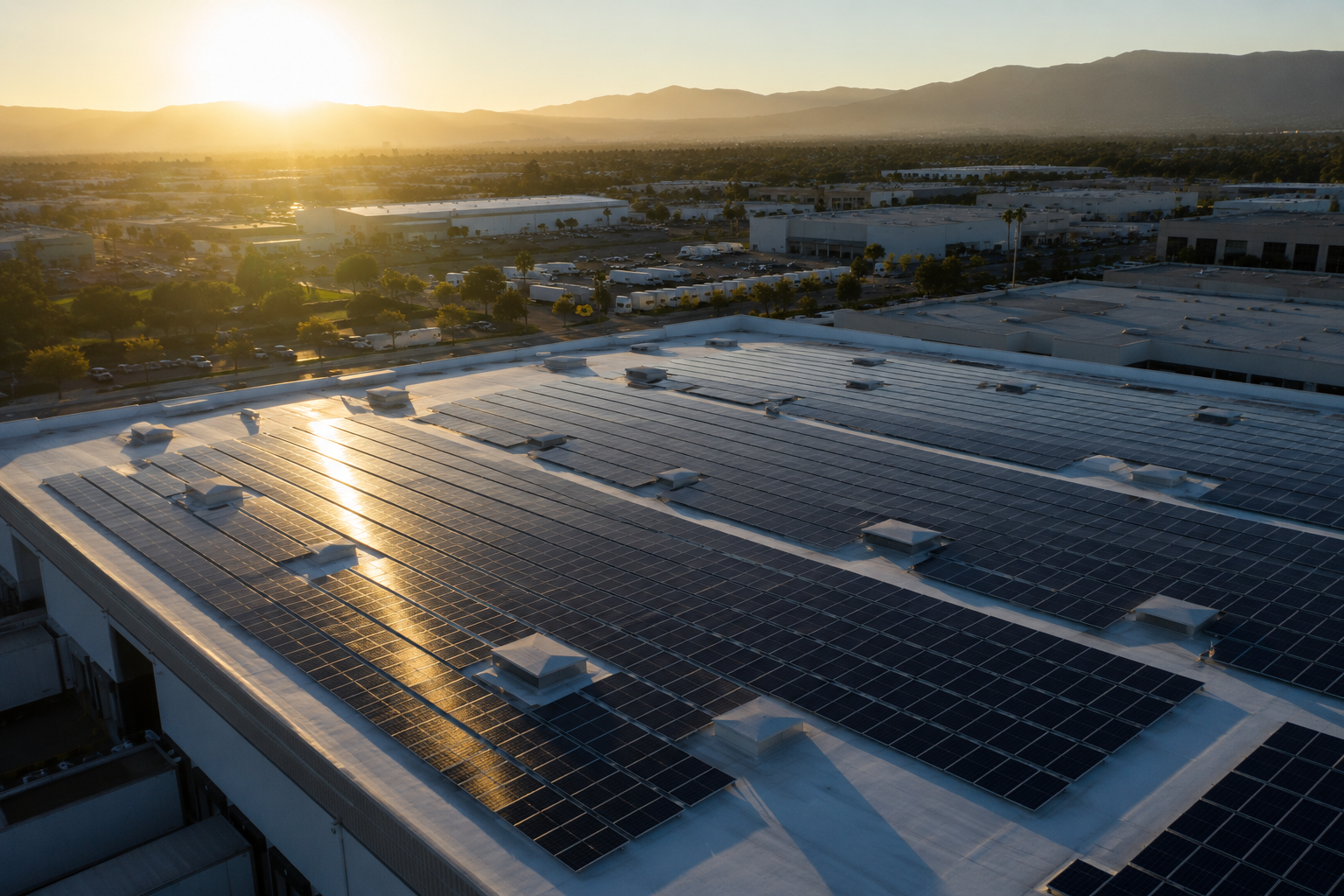
For more than two decades, commercial solar has been driven by a combination of rising electricity costs, improving technology, and favorable federal incentives. In 2026, one of those factors has changed.
The federal tax landscape has shifted significantly following the passage of the One Big Beautiful Bill Act (OBBBA). While the legislation accelerates the phase-out of certain tax credits for wind and solar projects, it does not eliminate the economic case for commercial solar. Instead, it changes how businesses should evaluate future projects.
Businesses considering solar today should focus on long-term operating costs, electricity consumption, project economics, and system design rather than incentives alone.
What Changed?
The biggest change is the timeline for federal clean electricity tax credits under Internal Revenue Code Section 48E.
Under current law:
Solar projects that begin construction on or before July 4, 2026 generally remain eligible under the existing timeline.
Projects that do not begin construction by that date generally must be placed in service by December 31, 2027 to qualify.
New sourcing requirements related to Foreign Entities of Concern (FEOC) have also increased the importance of equipment selection and supply chain documentation.
For developers, these changes make project planning more important than ever. Financing, procurement, engineering, and construction schedules all play a larger role in determining whether a project qualifies under current law.
What Hasn’t Changed?
Although the tax rules have changed, several fundamentals remain exactly the same.
Electricity Costs Continue to Rise
For many California businesses, electricity remains one of the largest controllable operating expenses. Commercial customers continue to face increasing utility costs, complex time-of-use rate structures, and significant demand charges.
Reducing purchased electricity can still provide meaningful long-term savings, regardless of changing tax policy.
Solar Equipment Continues to Improve
Commercial solar equipment is more efficient, reliable, and durable than it was twenty years ago. Improvements in panel efficiency, inverter technology, monitoring systems, and engineering practices continue to improve overall system performance.
Commercial Solar Remains a Long-Term Asset
A properly designed commercial solar system can continue producing electricity for decades. Like any capital improvement, the value of the investment should be measured over its operating life rather than a single year’s tax benefits.
Which Businesses Continue to Make Strong Solar Candidates?
Not every property is an ideal candidate for commercial solar, but many businesses continue to benefit from onsite generation.
Projects often make the most financial sense for organizations with:
High annual electricity consumption
Significant daytime energy usage
Owner-occupied facilities
Large available roof or land area
Long-term plans to remain at the property
High utility demand charges
Manufacturing facilities, agricultural operations, warehouses, office buildings, auto dealerships, schools, municipalities, and many other commercial properties continue to be strong candidates when projects are properly evaluated.
The key is understanding the facility’s energy profile rather than assuming every building will produce the same financial outcome.
Why Battery Storage Is Becoming Part of the Conversation
Battery energy storage is becoming an increasingly important part of commercial energy planning.
While batteries do not replace solar, they can complement it by helping businesses:
Reduce demand charges
Shift energy usage during high-cost utility periods
Improve resilience during outages
Increase onsite energy flexibility
Whether battery storage is appropriate depends on how a facility uses electricity, its utility rate schedule, and the economics of the project. For some businesses, storage provides significant value. For others, solar alone remains the better investment.
How Businesses Should Evaluate Commercial Solar Today
One of the biggest mistakes businesses make is focusing only on incentives or the cost of equipment.
A successful commercial solar project starts with understanding the facility itself.
A thorough evaluation should include:
Historical electricity usage
Utility billing structure
Demand charges
Time-of-use rates
Available installation space
Structural considerations
Future operational plans
Financing options
Current incentive eligibility under applicable law
Only after these factors are understood can an accurate financial model be developed.
Why Experience Matters More Than Ever
Today’s commercial solar projects involve more than designing an array of solar panels.
Successful projects require coordination between engineering, permitting, structural analysis, electrical design, utility interconnection, financing, equipment procurement, construction, and long-term operations.
As regulations become more complex, experience becomes increasingly valuable.
Understanding utility requirements, permitting processes, evolving tax rules, and long-term system performance helps reduce project risk and improve investment outcomes.
Looking Ahead
The commercial solar industry is entering a new phase.
The conversation is shifting from “How much is the tax credit?” to “Does this project make financial sense for my business?”
For many companies, the answer will continue to be yes.
At CitiGreen, we’ve spent more than 24 years helping businesses evaluate commercial energy projects based on long-term value rather than short-term trends. Every project begins with understanding the customer’s operations, electricity usage, and financial objectives because the right energy solution is never one-size-fits-all.
As the industry continues to evolve, thoughtful planning, sound engineering, and experienced project development will matter more than ever.
Sources
Internal Revenue Service, FAQs for Modification of Energy Tax Credits Under Public Law 119-21 (One Big Beautiful Bill Act).
Internal Revenue Service, Notice 2025-42, Sections 45Y and 48E Beginning of Construction Guidance.
Solar Energy Industries Association, The Clean Energy Provisions in the One Big Beautiful Bill.